
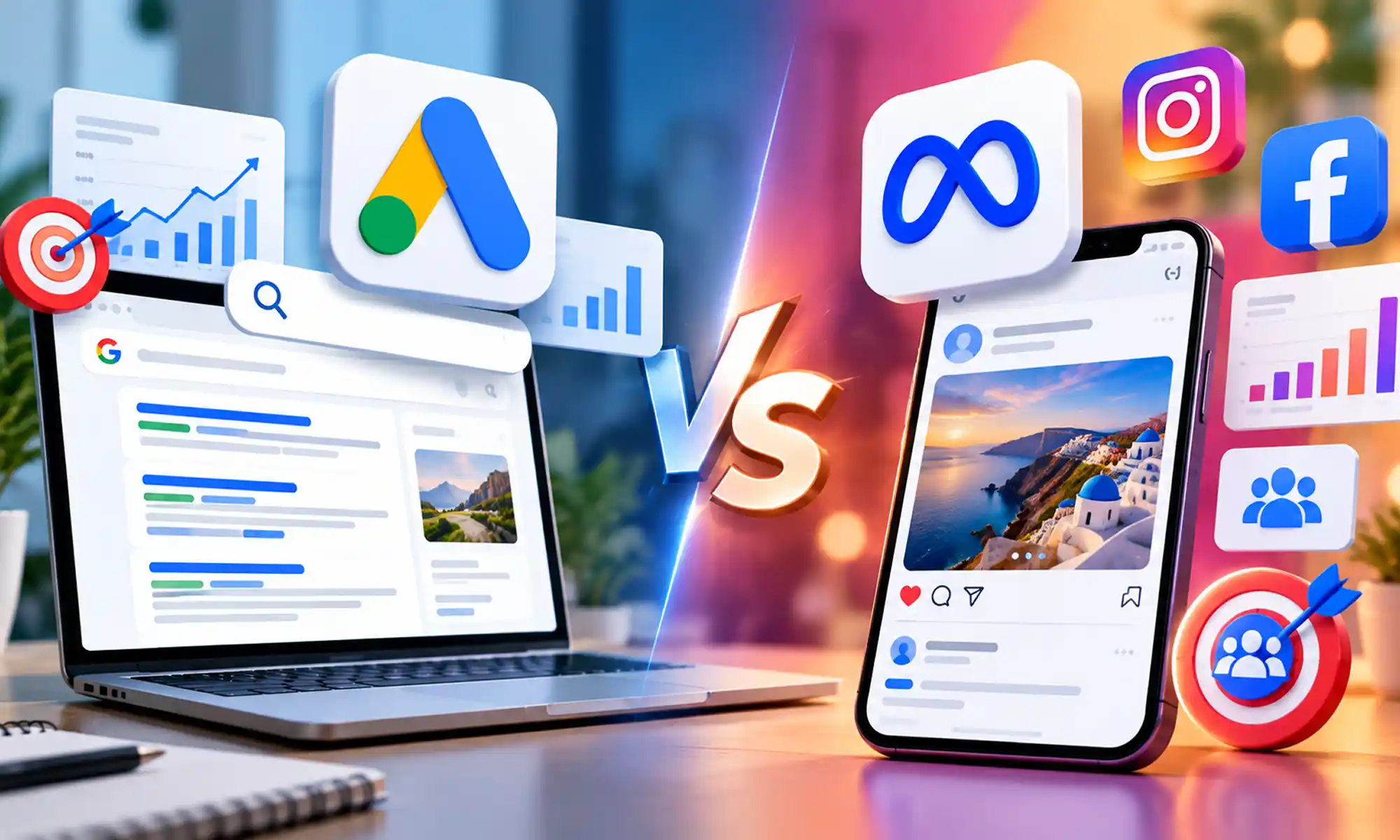
It is one of the first questions every business asks when it starts advertising: should we spend on Google or on Facebook and Instagram? The honest answer is that they do different jobs. Once you understand the difference, the right split for your business becomes much clearer.
The key difference: intent vs discovery
Google Ads (mainly Search and Performance Max) shows your ads to people who are actively searching for something, like “emergency plumber near me” or “CRM for small business”. The demand already exists; you are competing to capture it.
Meta Ads (Facebook and Instagram) shows your ads to people based on who they are and how they behave, while they scroll. Most of them were not looking for you. The ad has to create interest, which makes creative far more important.
When Google Ads usually wins
- People already search for your product or service by name or category.
- The need is urgent, such as repairs, legal help or last-minute bookings.
- You sell something considered and high-value where buyers compare options.
- You want leads quickly and can handle the enquiries they bring.
When Meta Ads usually wins
- Your product is new, visual or solves a problem people do not search for yet.
- You sell to consumers, especially in e-commerce, apps or events.
- You can produce a steady flow of fresh images and short videos.
- You want to build an audience you can retarget and nurture over time.
Why most businesses end up using both
The two platforms feed each other. Meta can introduce your brand to people who later search for you on Google, and Google search data can show which messages to test in your Meta creative. Retargeting on either platform brings back visitors who did not convert the first time.
A sensible starting point is to put most of your budget where demand is already proven, often Google Search for service businesses and Meta for consumer products, and to run a smaller, clearly measured test on the other platform.
Get tracking right before you judge results
Comparing platforms is only fair when both measure the same thing. Before spending seriously, make sure conversions such as form fills, calls and purchases are tracked accurately, ideally with server-side tracking, and judge each platform on cost per lead or return on ad spend rather than clicks.
Questions to decide your split
- Do people already search for what you sell? If yes, start with Google Search.
- Can you produce new creative every week or two? If yes, Meta becomes much stronger.
- What is a customer worth over time? Higher value supports higher cost per lead.
- How quickly do you need results? Search usually delivers faster; Meta usually scales further.
Still unsure? Our Paid Ads team will review your market and accounts in a free audit and recommend a budget split based on your numbers, not guesswork.